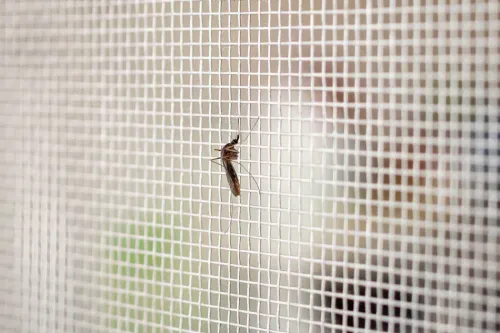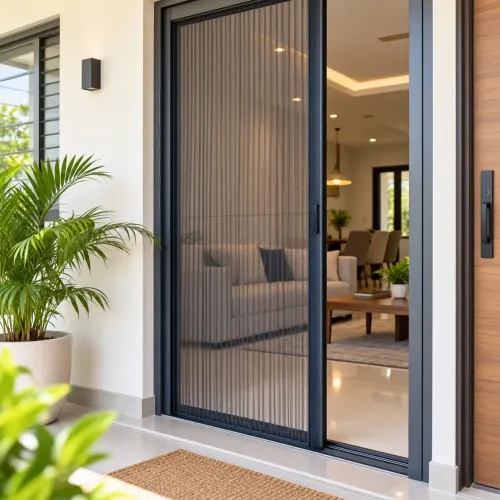
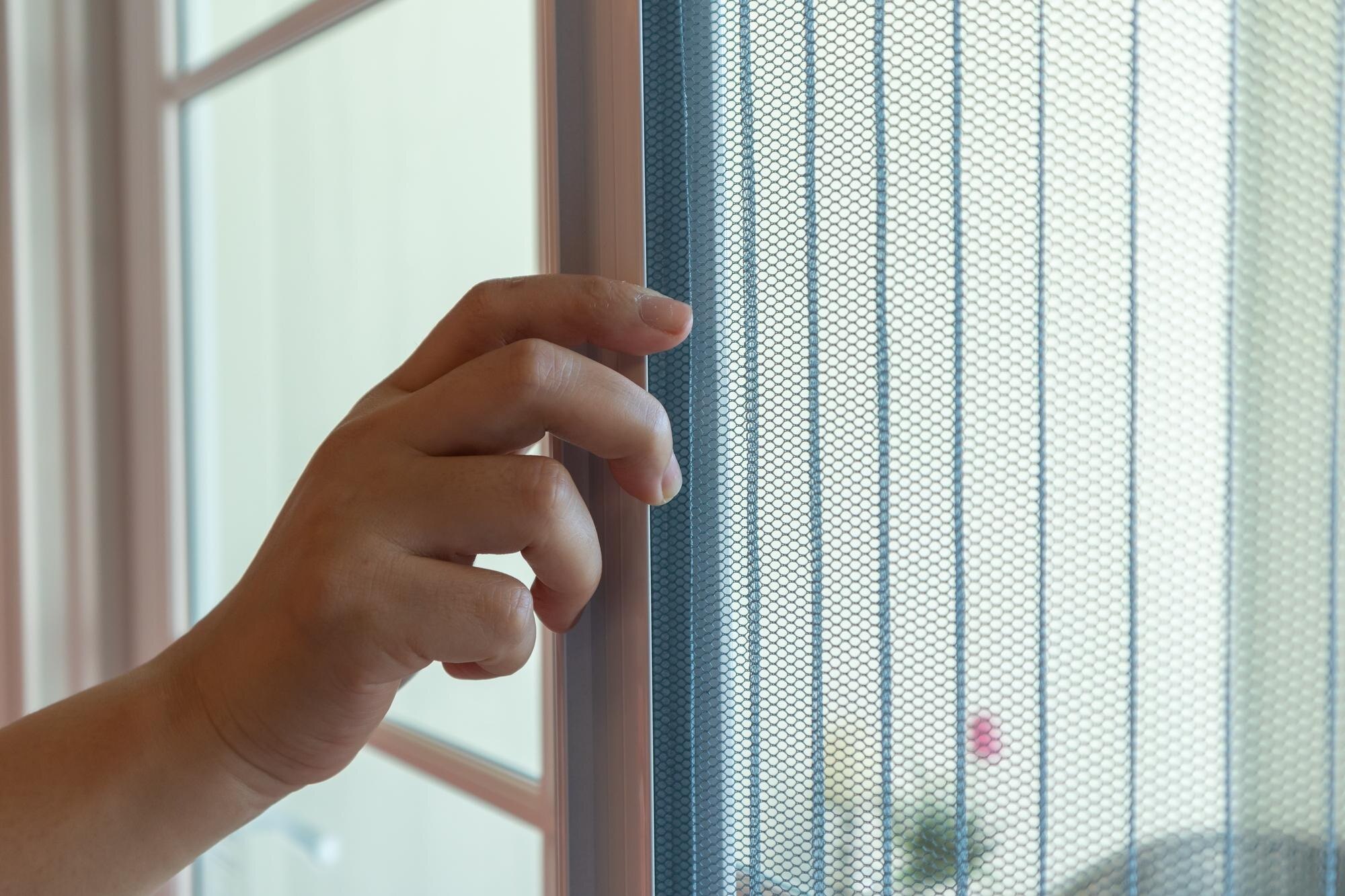
A custom screen can fail even when the mesh itself is strong: the opening may be measured incorrectly, the guides may not clear the handle, or the perimeter may leave an insect-sized gap. By the end, you will have a practical method for measuring the opening, comparing system types, checking technical capability, and demanding evidence before approving a manufacturer.
Key takeaways
- Measure width and height at several points, including sill, handle, hinge, and drain clearance.
- Specify whether the screen mounts inside, outside, or within the opening before requesting a quote.
- Match pleated, sliding, hinged, or roller screens to traffic, operating clearance, and weather exposure.
- Request mesh specifications, frame details, installation records, warranty terms, and traceable manufacturing documents.
Start with the opening, not the product catalogue
A manufacturer needs the opening’s construction and operating space, not only a rough custom mosquito net measurement. Give the actual opening type, the intended screen position, and dimensions taken at several points so a nominally correct frame does not foul a handle, lock, hinge, drain, or uneven sill.
Send this information with your enquiry:
- Finished-frame width and height, measured at the top, middle, and bottom; include the smallest measurement.
- Opening depth from the fixing face to the obstruction behind it, such as a sash, shutter, grille, or curtain.
- Sash overlap and shutter overlap, measured where the panels meet and where the screen must seal.
- Diagonal measurements, sill level, visible bow, and any gap between the frame and surrounding masonry or uPVC.
- Handle projection, lock position, hinge location, drainage slots, and the clear fixing space around the opening.
- Number of sliding, hinged, or fixed panels; opening direction; and whether the screen must be removable.
- Clear photographs from inside and outside, with a tape measure visible, plus a simple sketch marking each dimension.
Ask for a whole-assembly drawing showing frame sections, guides, mesh, joints, seals, fixing points, and tolerances. The quotation should state the proposed finished size, maximum panel limits, installation assumptions, and what happens if the site opening differs from the submitted measurements.
A signed drawing approved before fabrication prevents an inexpensive measuring mistake from becoming an unusable screen.
Measure unusual windows and doors without confusing the screen size
A masonry opening is not the screen size. Record the dimensions of the plane where the finished screen will sit, then confirm whether the manufacturer wants the clear opening or the finished-frame dimensions.
For irregular window measurement, measure width and height at the top, middle, and bottom, then report the smallest dimension and the largest variation. Measure both diagonals, sketch angled corners or curves, and provide a cardboard or paper template when the shape cannot be described reliably with four numbers.
For a multi-panel sliding door, identify the panel that moves, the panel that remains fixed, and the track or reveal available for the screen. Measure the clear height, the full screen-run width, panel overlap, track depth, handle projection, and any obstruction at the sill.
Do not add every glass panel width unless the screen spans the entire opening.
A French door screen needs separate measurements for each leaf if the doors open independently. Record the meeting-stile gap, hinge positions, handle projection, threshold height, and whether the screen mounts inside or outside the doors.
For a casement window screen, state which side is hinged and measure the sash, opening, handle projection, and clearance through the opening arc. With a uPVC frame, measure the actual fixing surface and gasket or bead line, not the surrounding plaster or brickwork. Send photos showing corners, drainage slots, handles, and the proposed fixing plane.
Ask the manufacturer to mark the final screen width and height on the quotation.
Match the screen system to traffic, clearance, and exposure
Choose the screen by how often the opening is crossed, how much space surrounds it, and what wind or weather it faces. A fixed screen suits windows that remain closed; it gives the fewest moving parts and the strongest continuous seal.
Velcro mesh suits a low-cost, removable window covering, but repeated removal can weaken adhesion and create edge gaps.
| Opening condition | Best-fit design | Check before approval |
|---|---|---|
| Rarely accessed window with solid fixing space | Fixed screen | Frame rigidity, perimeter seal, and cleaning access |
| Occasional access where the screen must come off | Velcro mesh | Adhesive compatibility, surface cleanliness, and closure force |
| Narrow balcony or frequently used doorway with limited storage clearance | Pleated mesh | Track alignment, stack-back space, and bottom-guide stability |
| Window or door needing concealed storage above the opening | Roll-down screen | Spring or chain operation, housing clearance, and side-guide engagement |
Pleated mesh works well for regular foot traffic only when the track stays level; a small frame twist can make the folds bind. A roll-down screen needs a protected housing in exposed locations, because grit, rain, and wind can damage guides or prevent full closure.
For any retractable design, request a complete-system cycle test stating open-close cycles, test dimensions, wind or load condition, mesh deformation, guide disengagement limit, latch performance, and failure criteria. Do not treat insect mesh as fall protection or security: retaining a child, pet, person, or falling object requires a separate structural test and design basis.
Check mesh, frame engineering, and insect-exclusion performance
Approve a custom screen only when the evidence covers the mesh, frame, seals, fixings, and operating hardware as one assembly. A mesh certificate alone cannot show that a door will close squarely, a sliding panel will stay in its track, or wind will not open a perimeter gap.
Ask for these records before comparing quotations:
- The mesh aperture, mesh count and yarn diameter in both directions, plus the percentage open area. For woven mesh, estimate open area as (1 − count × yarn diameter) for each direction, multiplied together using consistent units. Two meshes labelled 18 × 16 can therefore differ in airflow and exclusion.
- A declaration or test report to ASTM D3656 insect screening for the mesh itself. Treat it as material evidence, not proof of the finished assembly.
- A dimensioned frame drawing showing section size, corner-joint method, maximum panel dimensions, tolerances, spline or clamp retention, and the seal against the sill, jambs, and head.
- Assembly test results covering wind loading, leakage or gap control, opening and closing, latch operation, and guide retention. For pleated, roll-down, or retractable screens, require cycle count, test size, load condition, deformation limit, disengagement limit, and failure criteria.
- A physical corner sample or finished sample matching the proposed construction, including fasteners and seals.
A finer mesh can exclude smaller midges and no-see-ums, but it reduces airflow and daylight. Reject “mosquito-proof” as a standalone claim; require a target pest size or aperture range.
Do not use insecticide-treated bed-net credentials to validate a building screen. Those WHO specifications address treated textile netting, not frame strength, dimensional accuracy, weathering, or operating life.
Compare manufacturing control, installation, warranty, and records
A capable manufacturer can show how a custom screen is controlled from drawing to site acceptance; unsupported claims stop at “mosquito-proof.” Require a signed shop drawing showing reveal depth, diagonals, frame bow, guide parallelism, sill level, handle clearance, drainage, and manufacturing tolerances.
| Evidence | Capable manufacturer | Unsupported supplier |
|---|---|---|
| Production control | Retained sample, mesh identification, lot traceability, incoming checks for aperture and coating, plus frame dimensional inspection | No batch record, sample, inspection sheet, or stated tolerance |
| Design validation | Shop drawing, maximum panel limits, and cycle testing for rollers, hinges, latches, or pleats | Catalogue dimensions presented as proof of performance |
| Installation | Installation record with fixing points, measured gaps, closure force, alignment, and free operation at several positions | Verbal sign-off based only on appearance at handover |
| Warranty | Separate coverage for mesh rupture, coating, frame deformation, hardware wear, tension loss, and installation defects | One broad warranty with exclusions hidden in fine print |
Ask the installer to record the acceptance checks, not merely the delivery date. Reject a retractable system if guides disengage, the panel binds, or gaps change across the opening.
Read exclusions for pet damage, chemical cleaners, coastal exposure, wind, improper storage, and non-standard openings. Delmen Nets 9650012393 should be judged by whether it supplies these records for the selected system, not by its manufacturer label alone.
Run cycle testing that reflects actual traffic, and retain the approved drawing with revisions, measurements, photographs, and service history. Those records make a warranty enforceable and expose recurring fabrication or installation errors.
Related products
 | Mosquito Nets For uPVC Doors Manufacturer and Supplier in Gurgaon Top Grade Mosquito Nets For uPVC doors manufacturers in Gurgaon, Haryana. View product → |
 | Velcro Mesh Systems Manufacturer and Supplier in Gurgaon Manufacturer of Velcro Mesh Systems - Velcro Net offered by Delmen Nets are of high quality, It protect from the... View product → |
Frequently asked questions
What information should you give a mosquito net manufacturer before requesting a quote?
Give the opening type, intended screen position, operating direction, nearby handles and locks, sill and drain details, and measurements taken at several points.
How do you measure an unusual window or door for a mosquito screen?
Measure width and height at the top, middle, and bottom, then record the smallest dimensions and note out-of-square conditions, obstructions, and the clearance needed for the screen frame.
How do you choose the right mosquito screen system for a window or door?
Match the system to traffic frequency, available clearance, opening direction, threshold conditions, wind and rain exposure, and the space needed to operate the door or window.
What should you check when evaluating a mosquito net manufacturer?
Check mesh material and aperture, frame construction, insect-exclusion details, manufacturing controls, installation method, warranty exclusions, maintenance records, and documentation for the supplied system.
Related products
 | Barrier free Mesh Systems Manufacturer and Supplier in Gurgaon Delmen Nets are Manufacturer & Supplier of excellent quality Barrier Free Doors Mesh Systems to our valuable... View product → |
 | Pleated Mesh Systems Manufacturer and Supplier in Gurgaon Delmen Nets is the manufacturers and the suppliers of an excellent and superior quality of Pleated Mesh Systems... View product → |
 | Insects Screens System Manufacturer and Supplier in Gurgaon We are leading manufacturer of Insect Screen Systems from Gurgaon. View product → |
 | Aluminium Doors and Windows Panel Aluminium Doors and Windows Panel Manufacturer and Supplier in Gurgaon Delmen Nets is one of the leading manufacturers and suppliers of high-quality aluminium windows and doors Panels... View product → |